
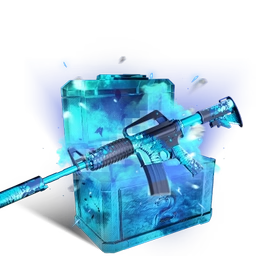
Counter-Strike 2 (CS2) has revolutionized the tactical shooter genre, but one element remains a beating heart of the community: weapon finishes. For over a decade, weapon cases have driven the game’s economy, fueled content creator channels, and added a thrilling element of chance to the player experience.
Whether players are looking to invest in digital assets or simply want a cool skin to show off in-game, understanding how CS2 cases work is essential. This guide breaks down everything from drop mechanics and opening odds to the intricacies of the Steam Community Market.
How to Get CS2 Cases
Before players can open or sell cases, they need to acquire them. Valve utilizes a few specific mechanics to distribute cases to the player base.
- Weekly Care Package: Active-duty players receive a care package upon leveling up their account once per week. Players are typically offered a choice of four items, which can include weapon cases, graffiti, or low-tier skins.
- Active Drop Pool vs. Rare Drop Pool: Cases are split into two primary categories. The Active Drop Pool consists of cases currently dropping frequently after matches. The Rare Drop Pool contains older cases that rarely drop (roughly a 1% chance after a match ends), making them scarcer and often more valuable over time.
- The Steam Community Market: Players can instantly buy any case they desire through the Steam Community Market or third-party marketplaces using real-world currency or Steam wallet funds.
- In-Game Matches: At the conclusion of casual, competitive, or premier matches, random case drops are occasionally awarded to players actively participating in Valve-secured servers.
CS2 Case Drop Pool Overview
To understand what cases are currently available through regular gameplay, players can reference the active versus rare distinction below.
| Drop Pool Type | Availability | Typical Cost Range | Examples |
|---|---|---|---|
| Active Drop Pool | High (Post-match & Weekly Drops) | Low (£0.03 – £0.50) | Kilowatt Case, Recoil Case, Dreams & Nightmares Case |
| Rare Drop Pool | Extremely Low (Post-match RNG) | Moderate to High (£1.00 – £100.00+) | CS:GO Weapon Case, Prisma Case, Operation Breakout Case |
| Discontinued/Operation | None (Only via Market/Trading) | High to Astronomical (£10.00 – £1,000.00+) | Operation Bravo Case, Huntsman Case |
The Mathematics of Case Opening
Opening a CS2 case requires two things: the case itself and a corresponding Key, which costs a flat £2.50 GBP directly from the in-game store.
Many players approach case openings with hope, but mathematics dictates the outcome. The community has extensively analyzed drop rates over the years, and the estimated odds for opening a case are as follows:
- Consumer Grade (White / Common): ~79.92%
- Industrial Grade (Light Blue / Uncommon): ~15.98%
- Mil-Spec (Dark Blue / Rare): ~3.20%
- Restricted (Purple / Mythical): ~0.64%
- Classified (Pink / Legendary): ~0.13%
- Covert (Red / Ancient): ~0.026%
- Special Item (Yellow / Exceedingly Rare – Knives or Gloves): ~0.26%
Note: Within each tier, there is an additional 10% chance to receive a StatTrak™ variant of the weapon, which tracks confirmed kills.
Tips for Managing the CS2 Economy
For those who wish to interact with the CS2 economy responsibly, a few best practices can save money and maximize value.
- Treat Cases Like Lottery Tickets: Never view opening cases as a reliable investment. Statistically, the return on investment (ROI) for opening cases is well below 50%.
- Buy Singles Instead of Opening: If a player wants a specific skin (like an AK-47 | Redline or an M4A1-S | Printstream), purchasing it directly from the Steam Market is almost always cheaper than buying keys and cases hoping to unbox it.
- Hold Active Drops: When a new case drops in price to £0.03 on the market, buying a few hundred and storing them in an inventory can yield long-term profits once the case moves to the rare drop pool.
- Watch the Major Tournaments: Valve frequently runs sales on major tournament capsules and viewer passes, which can drastically shift market dynamics. Keep an eye on global events.
Frequently Asked Questions (FAQ)
Can I get knives from cheap cases?
Yes. Every standard weapon case that features “Special Items” in its preview offers a chance to unbox a knife or pair of gloves, regardless of how cheap the case itself is. However, the specific knives available vary from case to case.
What is the most expensive CS2 case?
Historically, older operation cases—such as the Operation Bravo Case and the CS:GO Weapon Case #1—command the highest prices, often selling for tens or hundreds of dollars each due to their limited supply and nostalgic appeal.
Do cases expire?
No, CS2 cases do not expire. Players can hold onto cases in their inventory indefinitely. In fact, older cases tend to appreciate in value over time as the total supply in circulation decreases.
Are third-party trading sites safe?
While many third-party marketplaces are popular and utilized by millions of players, users must exercise extreme caution. Always verify URLs, use Steam Guard authentication, and beware of phishing scams promising free skins or high-tier trades.
What is the difference between CS:GO cases and CS2 cases?
Functionally, they are the exact same item. When Counter-Strike: Global Offensive was upgraded to Counter-Strike 2, all existing inventories, including cases, keys, and skins, carried over seamlessly with updated visual fidelity on the Source 2 engine.
CS2 cases are a fascinating intersection of gaming, probability, and economics. Whether someone is a casual player opening a single case after a hard-fought match or a dedicated trader tracking market trends, cases add an extra layer of engagement to the Counter-Strike ecosystem. Just remember to play responsibly, set a budget, and enjoy the game for what it is: one of the greatest tactical shooters ever made.
CS2Skin makes Case Skin simple and engaging—open virtual CS2 cases, explore skin outcomes, and enjoy clear, exciting results.